Wednesday, October 25, 2006

The Journey Beyond


As I go about my life's routines day and night, month by month, year by year, my perspective is usually confined to earthly existence. Occasionally, my focus reaches as far as the moon if it shines brightly when I retrieve the newspaper before morning daylight.

I recently saw a short video about the base ten number system and the powers of ten. It is amazing the way this number becomes huge when raised by an ever increasing exponent. We speak about thousands, millions, and billions and many of us don't have a perspective on how large these numbers really are.

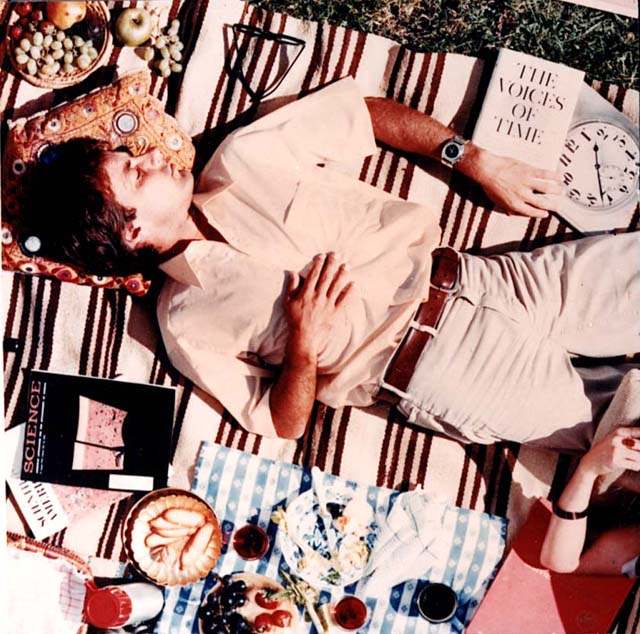
Dr. Wendy Hageman Smith in the Department of Mathematics and Statistics at Radford University presented this talk and the below video at a conference I attended in Salem, Virginia on October 7, 2006.

One square meter, for example, is about the size of a card table top. Multiply that by ten and it's larger by ten times. Imagine moving vertically above the increased surface size by that same distance. Next, multiply this new number by ten and again move vertically above by the new calculated distance. Continue this again and again, 24 times. (A number with 24 zeros is a septillion) This video helped me visualize this explanation and took my imagination to places it had never been.

If you get the opportunity, watch the eight minute video called Powers of Ten. It starts with the man on the blanket in the above image and expands to include surrounding views with each calculation. When the multiplication gets to ten to the ninth power, the view is of the moon orbit diameter. Ten to the eighteenth power is the size of our Milky Way Galaxy. Ten to the twenty-first shows groups of galaxies.

There is lots of space in the universe.

Return here on Friday, October 27 for an update.

Have a good day!

Labels:

Thursday, June 29, 2006

School's Out!


The school calendar has 180 days and I "subbed" 57 of those days this past year. After retiring from a business career in August 2005, I decided to try substitute teaching to spend time with young people. I completed the application process and enrolled in an Effective Teacher Training Course following my retirement. The eleven week training class was taught by a veteran teacher.

My first days in the classroom with students did not go as expected, but I gained experience as time passed and my performance improved. I began feeling better about filling-in for absent teachers sometime in January. Teachers are like all of us- they have appointments with doctors and dentist, workshops to attend, family emergencies, and sometimes sick children at home to care for.

When teachers are absent from their classes, they usually have a lesson plan for the substitute to follow. This plan is usually on track for the subject material under study. The priority for the sub is to execute the teacher's plan as directed. If the students finish early, then I supplement the remaining time with appropriate discussion or assignments of my choosing that are consistent with the class and subject being studied.

The 57 days mentioned above were days I worked in 6 different high schools and 2 middle schools. Early in the year, I stopped going to middle schools and subbed in high schools only. I was favorably impressed with the school system and observed students, classes, teachers, books, buildings, buses, activities, and environment much better than I expected after years of listening to people talk and watching or reading the news report.

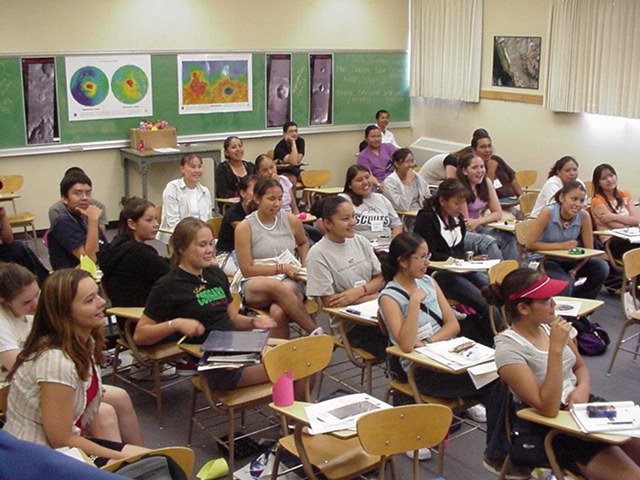
Each day as a sub, I was in classes with around 130 students. This is based on six periods of 20 to 30 students per period. A class period is around 55 minutes. During the 57 days of subbing, I was in class with over 7,000 students. If I subtract the same classes I subbed more than once and subtract the middle school days, I estimate that I spent one class period with over 2,000 unique high school age students. This gave me great insight into the modern teenager- the way they look and behave, the material they study, the way they dress and talk, the way they write and compute, and the technology they possess in terms of calculators, cell phones, Ipods, etc.

Schools and students are far more advanced than when I was a teenager.

It's so interesting to see the variation among teenagers in any group of thirty. In most classes I've seen students, during idle moments or between assignments, moving to the beat of music in their mind, others draw art, some will read or prepare for another class, some look at themselves through a compact mirror as they apply make-up, some chat with their neighbor, some talk to me, and some try to distract the whole group with their entertainment attempts.

In addition to the daily pay I received, I was rewarded with comments of appreciation from students, teachers and front office staff members. Some students gave me high-five or hand-slap gestures, or verbal responses of YEAH when they saw me in the hallway and learned that I would be their sub that day.

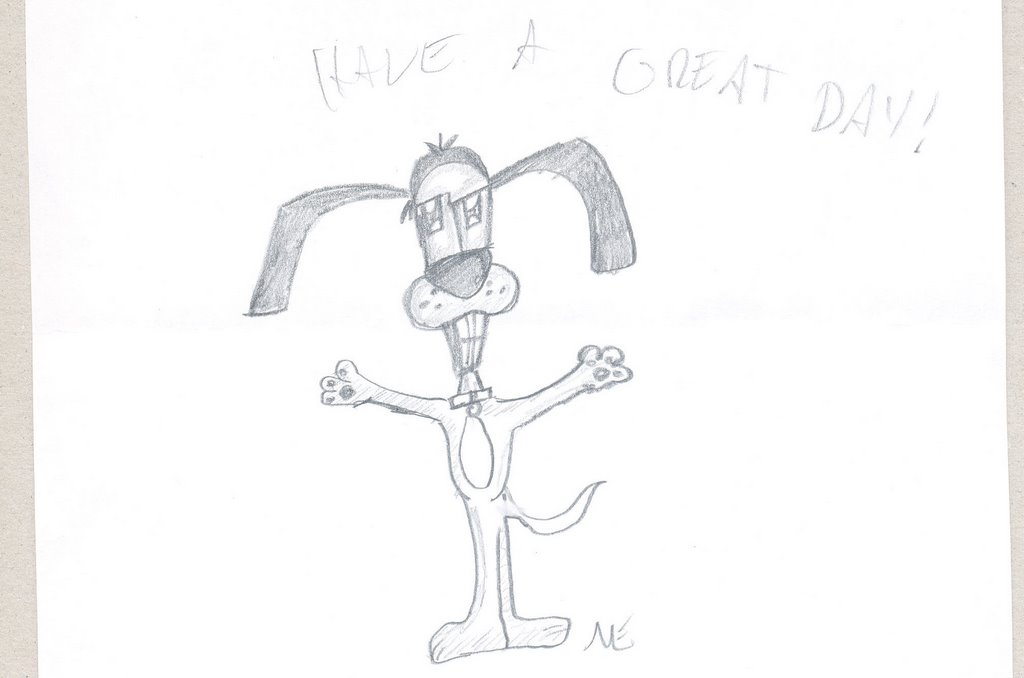
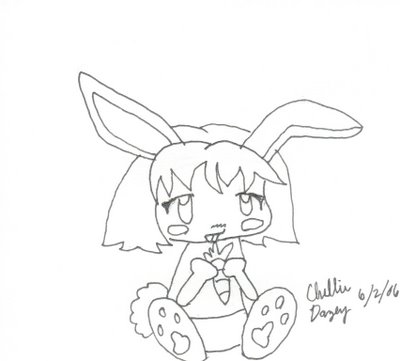
The drawings above and below were handed to me by art-inclined students as they filed out of class at period end on two occasions.

I subbed in grades 9 -12 in classes of PE/Health, Earth Science, Geometry, Algebra, French, Spanish, Band, Drama, Chemistry, English, ISS, and History.

During the last week of school in a sophomore English class, I said this to each period, "As you journey to become an educated person, use some of your time this summer to read and study on your own initiative. Your school and teachers are helping you to build a foundation of how to learn. Much of the knowledge you gain will come through personal habits you develop on your own time."

I put a list of recommended readings on the board.

If you are retired and advancing in age, think about getting involved with young people in some way outside your own family. It can be rewarding.

Have a good summer.

Return here on July 5 for another post.

Have a good day!


Labels:

Tuesday, February 14, 2006

The Lesson Begins

After roll call, I tell the class that our assignment is to read chapters seven and eight of "Lord of the Flies". This is a ninth-grade English class and this book is required reading. They have already read the first six chapters if everyone is on schedule. I hear a couple students say they are further along than chapter eight. Each student has a copy of the book as they begin reading silently. I tell them we will read for thirty minutes and then stop to discuss the book. I tell them I will call random names from the roster and ask them to respond to questions I plan to ask about the book.

Real quietness begins to settle across the room. We could almost hear a pin drop. Any movement like flipping a pencil against the desk or shuffling of paper sounds loud. I move quietly about the room to make sure everybody is on task. Some are not and I gently approach and speak to them as if we're in a library setting. I go back to the front of the class to take a seat. I open the book to scan and read sections to catch up to them. I hear one student say "it's too quiet in here". His comment is ignored and not responded to by anyone. He looks around the room and finally starts looking at his book as if to think "this man is serious".
Thirty minutes pass with unbelievable quiet as each of us read silently.

Tomorrow I'll tell you about our discussion of the book.

Have a good day!

Labels:

Monday, February 13, 2006

The Period Begins

My weight is equally distributed on each foot as I stand in front of the class. In the last five minutes twenty-five to thirty ninth-graders have evacuated the room and twenty-five to thirty different students have moved in to refill the desks. Some of the students are carrying book bags big enough to contain supplies to camp and hike the Appalachian Trail. The period start bell has rung and I look out across the room of faces and make eye contact with many as I introduce myself and explain that I'm their substitute teacher today. I'm holding my neon-green clipboard that I have come to learn is impressive to some students. The clipboard contains the class roster and perhaps written instructions from the regular teacher about the class lesson plan. I have already written my name and the assignment on the classroom board. I announce the assignment and lesson plan for the day after I focus on getting certain students who are standing or talking to settle into their seat. I tell them they should be in their regularly assigned seat. Many students see a sub teacher as a day of play and not much work so I must take command early or risk letting the class get out of control. As quietness begins to cascade across the room, I begin calling the names for the attendance record. I call first names only because it's a waste of time to sound out last names since they know their position on the alphabetical listing. I try to call names in rapid succession as they respond by saying "here" or by raising their hand and with a "here". Calling roll is a time when many think they can talk quietly to their neighbor and noise level can resume if it doesn't move quickly.

Tomorrow, I'll tell you what happens next.

Have a good day!

Labels:

Monday, February 06, 2006

Expect The Unexpected

Just as I plan for the unexpected when I budget household and family finances, I have learned to do the same when I stand in front of 25 to 30 high school students. I recently subbed for a sick English teacher. The lesson plan given to me was to ask the students to write about an event in their life that had a surprising outcome. I interpreted events like a family vacation that went wrong or a birthday party that was disappointing. I added an option for them to write about "The Tomb of the Unknown Soldier" in Arlington Cemetery. As I explained the assignment, the tomb required explaining to some students. Other students helped because they had visited that site. I asked if they chose to write about the tomb, then explain what it is, what it means to them, and how does it make them feel. I further explained there are no right and wrong answers. It's somewhat like art, I said. Our individual interpretation of objects is determined by our background, age, training, education, etc. I asked the class to take twenty minutes and write about their chosen topic. After that time I would randomly call names from the class roster and ask you to read portions of your writing. As the class started to write, I heard two boys and one girl seated near each other laughing and acting up. I moved into their vicinity to quieten them. When I approached them, one of the boys leaned forward and asked "Mr. Mabe, can I write about when I lost my virginity"? Without cracking a smile, I leaned down and said "I don't think that would be an appropriate topic. Now pick another topic and start writing". The group of three giggled and laughed at the boy's bravery.

After twenty minutes, students began reading to the class. I commented and remarked about their reading and praised them for what they shared. Other students reacted with comments about what was said. Over half the students chose to write about the tomb. Most who read their comments had impressive thoughts and articulate presentation. Some refused to share, a few didn't write anything, and one slept through the entire class. The class period was repeated five times.

Have a good day!

Labels: